

- 🗝️ Key Information About the Blue Mosque
- 🧭 Why Visit the Blue Mosque?
- 🚇 How to Get to the Blue Mosque?
- ⏰ What Are the Opening Hours of the Blue Mosque?
- 🕰️ Best Time to Visit the Blue Mosque?
- 💰 What Are the Entrance Fees for the Blue Mosque?
- 💻 Benefit of Reservation
- 🔍 Services and Practical Tips
- 💡 My Tips for a Successful Visit to the Blue Mosque
- 🏨 Best Hotels Near the Blue Mosque
- 🗺️ What to See Around the Blue Mosque
- 🧿 What to Do Near the Blue Mosque
- ⚠️ Tips to Avoid Scams
- 💬 My Personal Opinion on the Blue Mosque
- 🏗️ History and Architecture of the Blue Mosque
- ❓ FAQ about the Blue Mosque
- 📚 Official Sources on the Blue Mosque
- What Else to Do in Istanbul?
🗝️ Key Information About the Blue Mosque
| Official Name | Sultanahmet Camii, Sultan Ahmet Mosque |
| Address | Atmeydanı Cd. No:7, 34122 Fatih/Istanbul, Turkey |
| Opening Hours | Open daily from 9 am to 6 pm, but closed to visitors during the 5 daily prayers. |
| Entrance Fee | Free (donations are appreciated). |
| Tickets | Entrance is free, but for an enriched experience with a guide who will help you skip the security lines, you can book a guided tour here. |
| Visit Duration | Approximately 45 minutes to 1 hour. |
| Tip #1 | Go right at opening time or after the midday prayer (Dhuhr) or afternoon prayer (Asr). You will avoid large groups and enjoy a more serene and spiritual atmosphere. |
| Update | Last price and schedule check: January 2026 |
🧭 Why Visit the Blue Mosque?
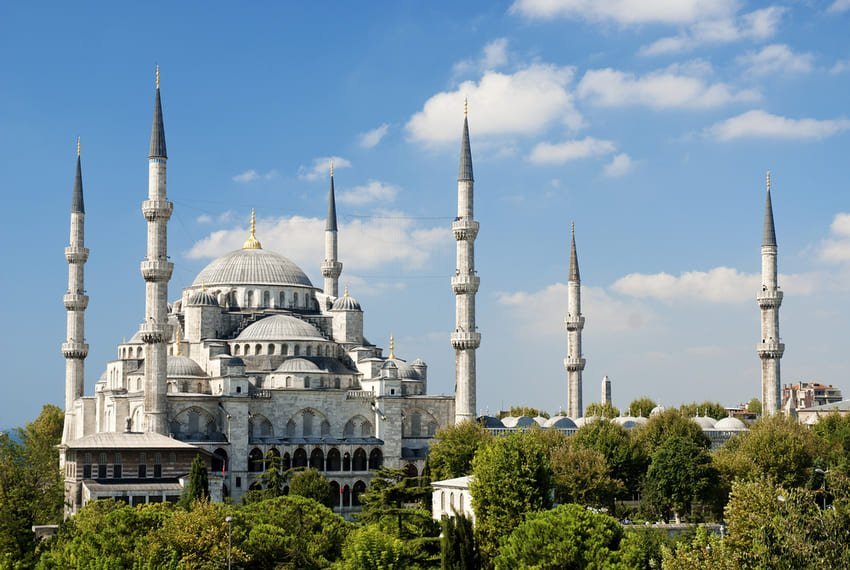
Imagine yourself for a moment facing a cascade of domes and six minarets piercing the Istanbul sky… The Blue Mosque is not just a monument, it is an emotion. Why does it attract millions of eyes? Because it is the vibrant heart of the city, an active place of prayer where Ottoman imperial history meets daily spiritual fervor. It is a unique experience.
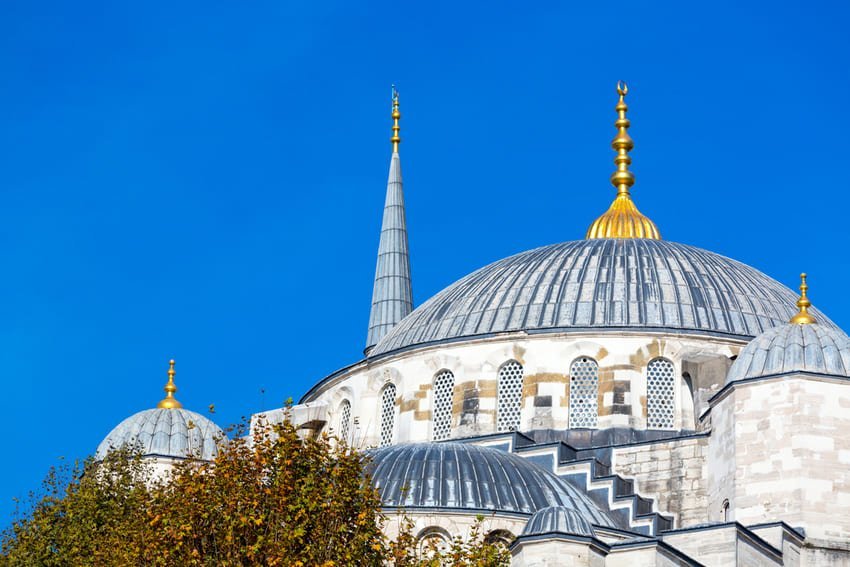
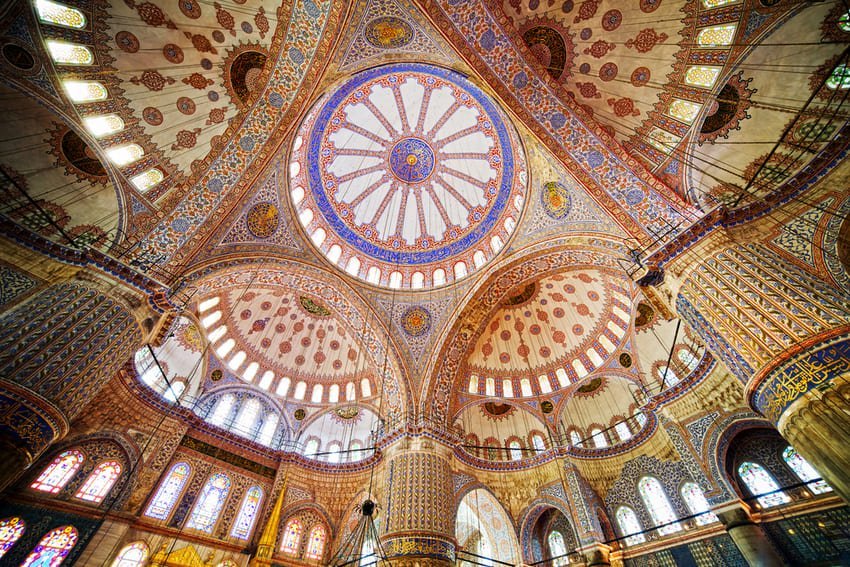
Inside, the spectacle continues. What is crazy is that more than 20,000 handmade Iznik tiles cover the walls, bathing the immense prayer hall in an almost supernatural bluish light. With its main dome 43 meters high, it is one of the most photogenic and visited monuments in all of Turkey.
🚇 How to Get to the Blue Mosque?
The Blue Mosque is located in the heart of the historical peninsula, making it very easy to access. Here are the simplest options to get there.
Metro and Tram
The simplest and most efficient option is, without hesitation, the T1 tramway (Kabataş-Bağcılar). It is the line that serves all the nerve centers of the old city.
- Get off at the Sultanahmet stop. The mosque is less than a 5-minute walk away, right across from Hagia Sophia. You can’t miss it!
- From Taksim, take the F1 funicular to Kabataş, then the T1 tram. Count about 25 minutes of travel time.
- From Kadıköy (Asian side), take the ferry to Eminönü, then the T1 tram for just two stops.
- The Istanbulkart is essential for using public transport. A single trip costs about 15 TL.
Bus, Ferry, and Taxi
Other options are possible but often less direct. Many buses serve Sultanahmet Square, but the tram remains faster. For a spectacular arrival, the ferry to Eminönü offers you a breathtaking view of the old city skyline. Regarding taxis, I strongly advise you to use the BiTaksi or Uber apps to avoid meter scams and know the price in advance. A ride from Taksim costs about 150-200 TL depending on traffic. If you are new to Uber, you can enjoy a discount on your first ride via my referral link.
📢 My expert tip: choose the T1 tramway. It is the most economical, fastest, and reliable way to get to the Blue Mosque, while avoiding Istanbul’s legendary traffic jams. It’s also a great way to soak up the city’s atmosphere.
⏰ What Are the Opening Hours of the Blue Mosque?
The Blue Mosque is an active place of worship, so its visiting hours are paced by the five daily prayers. Be attentive to these details so you don’t find the doors closed:
- General opening: Every day, from approximately 09:00 until one hour before the last evening prayer (around 6 pm).
- Closed to visitors: The mosque closes its doors to non-worshippers about 30 minutes before each call to prayer and remains closed for 90 minutes. Prayer times change every day; check them on an app like “Muslim Pro” or on the signs at the entrance.
- Friday: Access is particularly restricted on Friday mornings and until early afternoon due to the weekly grand prayer. I advise against visiting on this day before 2:30 pm.
🕰️ Best Time to Visit the Blue Mosque?
For a pleasant visit, plan for between 45 minutes and 1 hour. Timing is crucial to avoid the immense crowds that press at its gates.
To Avoid the Crowds
Honestly, the secret is to visit off-peak. The best time is undoubtedly early in the morning, right at opening around 9:00 am, or late afternoon, between two prayers. Absolutely avoid the 11 am – 3 pm slot, especially in summer, when the heat and tourist buses make the experience much less pleasant. As the Basilica Cistern and Hagia Sophia are right next door, most people follow the same route. By reversing the order, you gain peace and quiet.
To Take Photos
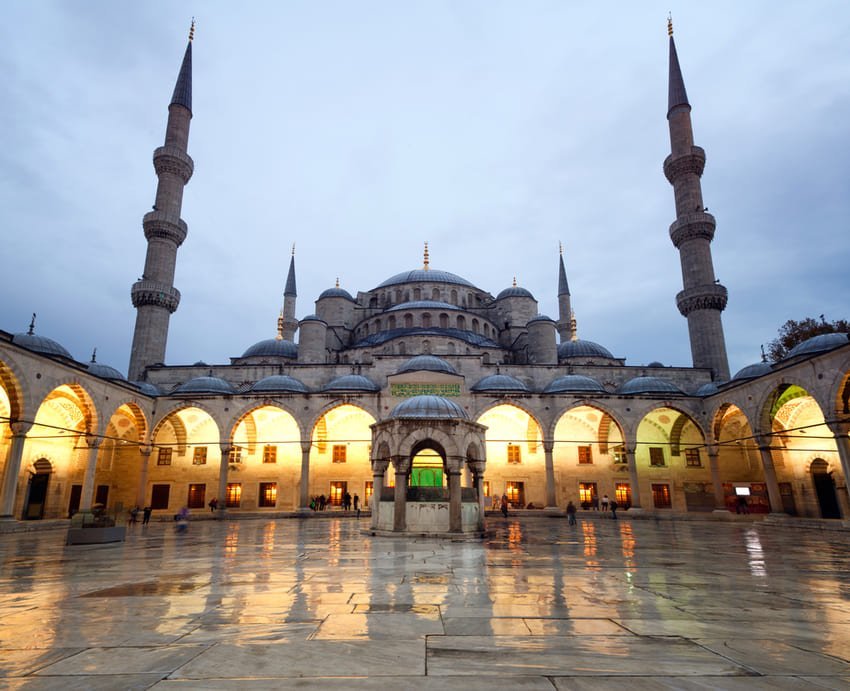
For photography lovers, the morning “golden hour” is magical. The soft light illuminates the mosque’s facade and Sultanahmet Square without being harsh. Imagine capturing the first rays of sun on the bluish domes… Another incredible moment is at twilight, just after the evening prayer call (Maghrib), when the mosque lights up and the atmosphere becomes fairy-tale like.
💰 What Are the Entrance Fees for the Blue Mosque?
Here is the essential information to plan your budget without surprises: entrance to the Blue Mosque is entirely free.
- Full Price: 0 TL (Free)
- Donations: At the exit, you will find a box for donations. Even if it is not mandatory, a small gesture is always appreciated to contribute to the maintenance of this masterpiece.
- Additional Costs: If your outfit is not deemed appropriate (exposed shoulders or knees for men and women, uncovered hair for women), you will be lent scarves and long skirts for free at the entrance.

💻 Benefit of Reservation
Even though admission is free, lines for security and dress code checks can be very long. Booking a guided tour online is a tip I give to all my friends.
Book Your Guided Tour Online
Frankly, it’s the best way to transform your visit. By booking a guided tour, you benefit from priority access which saves you precious time. No need to queue for an hour in the sun! A local guide will give you keys to understanding the history, architecture, and symbols that you would miss alone. It is the guarantee of a richer and smoother experience.
Is the Istanbul Pass Worth It?
If you plan to visit several monuments, the Istanbul Tourist Pass® is a brilliant option to experience the city to the fullest without breaking the bank. It is cost-effective if you visit at least 4 historical sites. Imagine: more than 100 attractions included, skip-the-line tickets for major sites like Topkapı and the Basilica Cistern, and even a Bosphorus cruise! You gain freedom, avoid endless queues, and discover gems. And the best part is that you can cancel for free. It is the key to a stress-free stay full of discoveries.
🔍 Services and Practical Tips
Dress Code and Rules of Conduct
The Blue Mosque is a sacred place. To respect it, appropriate attire is required. For women: cover your head (a scarf is essential), shoulders, and knees. For men: wear long pants or long shorts covering the knees. You will be asked to remove your shoes at the entrance (small plastic bags are provided). Inside, speak softly and do not take photos of people praying.
Accessibility (PRM, Strollers, Sensitivity)
Access for people with reduced mobility (PRM) is possible via a dedicated entrance, but honestly, the visit can be complicated due to the crowds and thick carpets inside. It is not the easiest monument to visit in a wheelchair. For strollers, it’s a bit of the same challenge; it is simpler to leave it at the entrance if possible. There is no official audio guide, but many explanatory signs in English are present.
Amenities (Toilets, Lockers, Wi-Fi)
Public toilets (often paid, have some coins ready) are available in the park around the mosque. There is no official locker for bulky luggage, travel light! Wi-Fi is not available inside the mosque.
Dining and Shopping (My Advice)
Right next to the mosque, you will find many cafes and restaurants, but they are often “tourist traps”. My advice: move away a bit! Walk 5 minutes towards the small street Arasta Bazaar, just behind the mosque. You will find quieter cafes there to drink a good çay (Turkish tea). For an authentic simit (the famous sesame bread), buy it from one of the red street carts on Sultanahmet Square.

Photo & Video (The Best Spots)
Photos are allowed inside, but without flash. Tripod use is prohibited. Here are my 3 favorite spots:
- From the center of Sultanahmet Square: This is the classic viewpoint, with the fountains in the foreground and the mosque facing Hagia Sophia. Magical at sunrise or sunset.
- From the inner courtyard: Before entering, take the time to admire the perfect symmetry of the courtyard. The angle from the northwest corner is superb for capturing the cascading domes.
- Inside, near the columns: Stand near one of the four “elephant legs” (the huge pillars) and look up for a dizzying photo of the main dome.
💡 My Tips for a Successful Visit to the Blue Mosque
Here is my little personal checklist so that your visit is absolutely perfect and hitch-free.
- Wear socks! You will have to take off your shoes, and walking barefoot on shared carpets is not always pleasant.
- Always have a scarf in your bag if you are a woman. Even if they lend some, having your own is more comfortable and hygienic.
- Bring some change (lira) for public toilets or to make a donation if your heart tells you to.
- Combine your visit with the Arasta Bazaar just behind; it’s a quieter and less intimidating version of the Grand Bazaar.
My “Off the Beaten Path” Tip
For me, the best free and little-known viewpoint of the Blue Mosque is from the terrace of the Seven Hills Hotel. You don’t have to dine there; you can simply go up for a coffee. The 360° panoramic view of the Blue Mosque on one side and Hagia Sophia on the other is breathtaking, especially at sunset. It’s my little secret for unforgettable photos, far from the crowds.
🏨 Best Hotels Near the Blue Mosque
Staying in the Sultanahmet district means sleeping in the heart of history. Here is my selection of tested and approved hotels, chosen for their excellent ratings (minimum 4/5) and their immediate proximity.
| Budget | Hotel Name | Description |
|---|---|---|
| Budget | Agora Guesthouse | A charming and friendly guesthouse, perfect for solo travelers. 5 minutes walk. Its major asset is its rooftop terrace with a sublime view of the Bosphorus and the Blue Mosque. |
| Budget | Tulip Guesthouse | Family atmosphere and hearty Turkish breakfast served on a panoramic terrace. 7 minutes walk. Ideal for an authentic and economical stay. |
| Mid-range | Hotel Amira Istanbul | A charming hotel with a neat design and attentive staff. 8 minutes walk. We love its spa and exceptional breakfast. |
| Mid-range | World Heritage Hotel Istanbul | Elegant rooms in a modern Ottoman style. Only 3 minutes walk. Its unbeatable location is its greatest asset. |
| High-end | Four Seasons Hotel at Sultanahmet | Absolute luxury in a beautifully renovated former neoclassical prison. 5 minutes walk. Its inner garden is an oasis of peace. A unique experience. |
| High-end | Seven Hills Hotel | Known for its legendary terrace offering THE best view of the Blue Mosque and Hagia Sophia. 4 minutes walk. The major asset is having breakfast facing this panorama. |
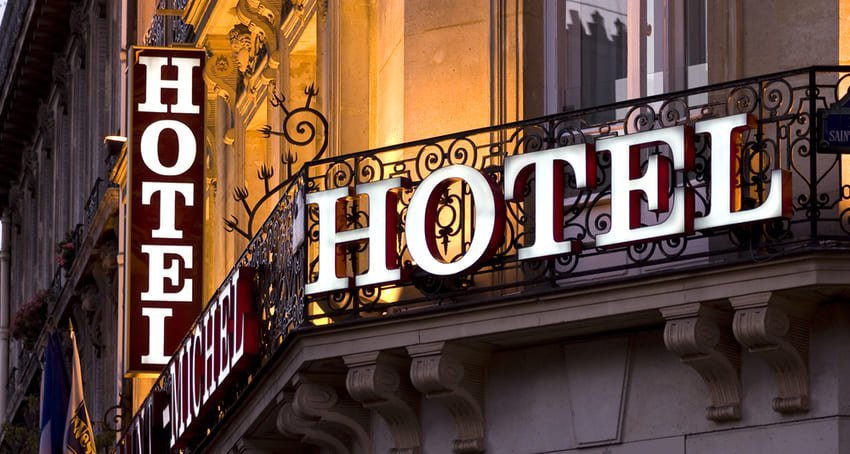
For me, without hesitation, the best hotel in Istanbul close to the Blue Mosque is the Seven Hills Hotel because waking up and having your coffee with this breathtaking view of the two most iconic monuments of Istanbul is an emotion that is priceless.
🗺️ What to See Around the Blue Mosque
Take advantage of your visit to discover other must-see sites, all within walking distance. The Sultanahmet district is a veritable open-air museum!
- Hagia Sophia: Right across, the other wonder of Istanbul. (2 minutes walk).
- Topkapi Palace: The former residence of the Ottoman sultans. (10 minutes walk).
- The Basilica Cistern: An unforgettable mystical and underground atmosphere. (5 minutes walk).
- The Roman Hippodrome: Right next to the mosque, with its ancient obelisks. (1 minute walk).
- The Grand Bazaar: Get lost in the largest covered market in the world. (15 minutes walk).
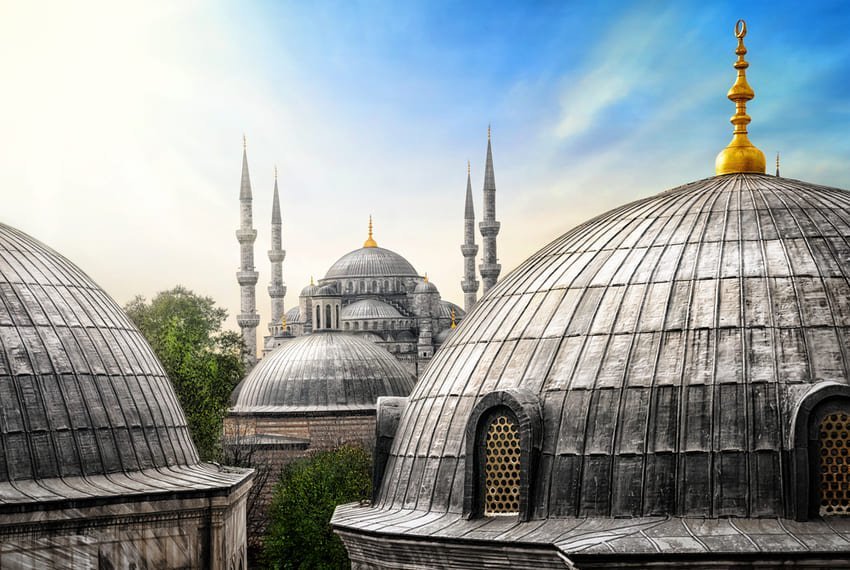
Suggested Itinerary (An Imperial Half-Day)
For an efficient morning, I suggest this itinerary:
- 9:00 am: Visit the Blue Mosque to avoid crowds.
- 10:00 am: Cross the square to visit Hagia Sophia.
- 11:30 am: Plunge into the depths of the Basilica Cistern.
- 12:30 pm: Finish with a stroll on the Hippodrome and a well-deserved lunch break.
This district is the soul of ancient Constantinople. Every street corner tells centuries of history, between Byzantine grandeur and Ottoman splendor.
🧿 What to Do Near the Blue Mosque
Extend the magic of your visit to the Blue Mosque! Just next door, hidden treasures, unique activities, and services await you, selected for you:
⚠️ Tips to Avoid Scams
Istanbul is a very safe city, but the Sultanahmet area, being very touristy, attracts some opportunists. Here is how to spot them in the blink of an eye:
- Unofficial fake guides: Men approach you claiming to be “official” guides and offer to get you past the line (which is often for security checks, not tickets, since it’s free). They wear fake badges.
- Kevin’s Countermove: Decline politely but firmly with a “Hayır, teşekkür ederim” (No, thank you) and continue on your way. Only book guides on reliable platforms.
- The shoe shiner scam: A man “accidentally” drops his brush in front of you. If you pick it up, he will insist on polishing your shoes as a thank you, before demanding an exorbitant sum.
- Kevin’s Countermove: Never pick up the brush. Ignore him and keep walking. It’s a very well-known scam.
Just stay vigilant and everything will go wonderfully well! Turkish hospitality is the rule, these scams are the exception.
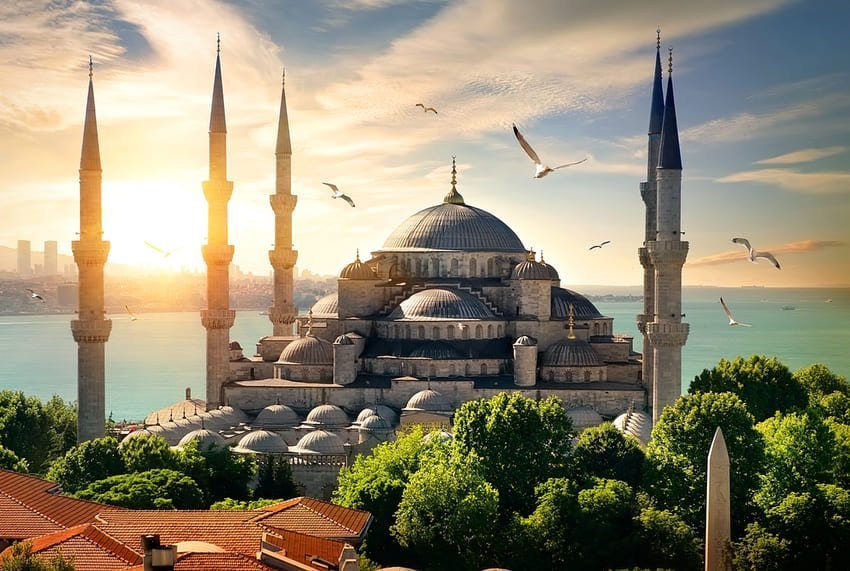
💬 My Personal Opinion on the Blue Mosque
After years of roaming Istanbul, the Blue Mosque remains a place that impresses me. Here is my honest analysis, with its ups and downs.
The Expert’s “Pros” 👍
- Architectural Emotion: Its exterior silhouette is one of the most beautiful urban landscapes in the world. It is the icon of Istanbul.
- Palpable Spirituality: The fact that it is an active mosque gives it a soul that other monument-museums have lost. The call to prayer echoing from its minarets is a moment suspended in time.
- Free Admission: In a neighborhood where all major visits are paid (and expensive), its free access makes it accessible to all, which is wonderful.
The “Cons” 👎
- The Crushing Crowds: This is its biggest flaw. The experience can be spoiled by the noise and the crush, especially in high season.
- My solution: Go very early in the morning (before 9:30 am) or at the end of the day.
- A Rather Quick Visit: The interior, although magnificent, is visited quickly. The area accessible to tourists is quite limited.
- My alternative: For a deeper immersion in Ottoman mosque art, visit the Süleymaniye Mosque (Suleiman the Magnificent), larger, less crowded, and just as sublime.
My Favorite Moment
Frankly, for me, the most magical moment is not inside, but outside. It is sitting on a bench in Sultanahmet Square, after dark. On one side, Hagia Sophia illuminated, on the other, the Blue Mosque, majestic and serene. When the evening call to prayer begins, the two monuments seem to answer each other. This sonic and visual dialogue is the very essence of Istanbul. It is a moment of peace and pure beauty that gives me chills every time.
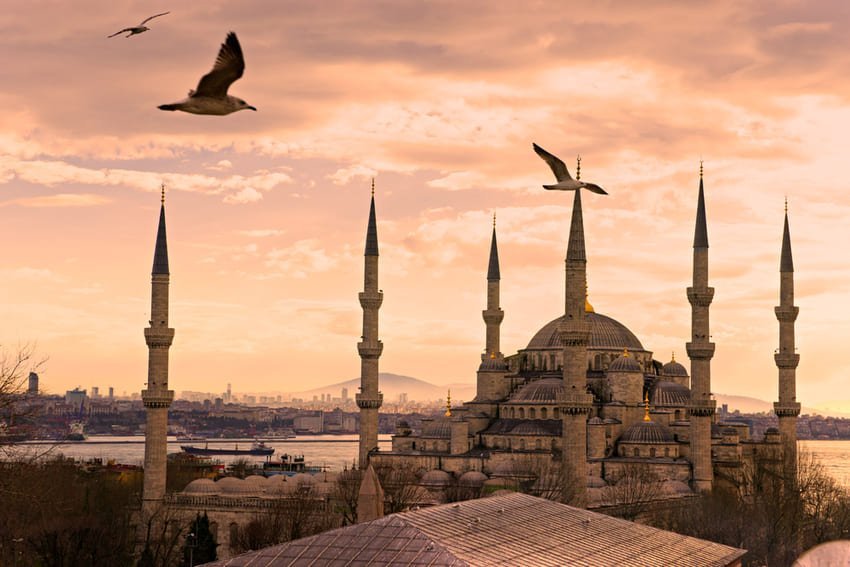
🏗️ History and Architecture of the Blue Mosque
The Blue Mosque, or Sultan Ahmet Mosque, is much more than a simple tourist attraction. It is a bridge between the peak of the Ottoman Empire and modern Istanbul. It was built between 1609 and 1616 under the reign of the young Sultan Ahmet I, who wanted to surpass the grandeur of his neighbor, Hagia Sophia.
Identity Card and Key Figures
- Construction Year: 1609-1616
- Architect: Sedefkâr Mehmed Ağa, a student of the famous Mimar Sinan.
- Architectural Style: A harmonious blend of classical Ottoman architecture and Byzantine elements (inspired by Hagia Sophia).
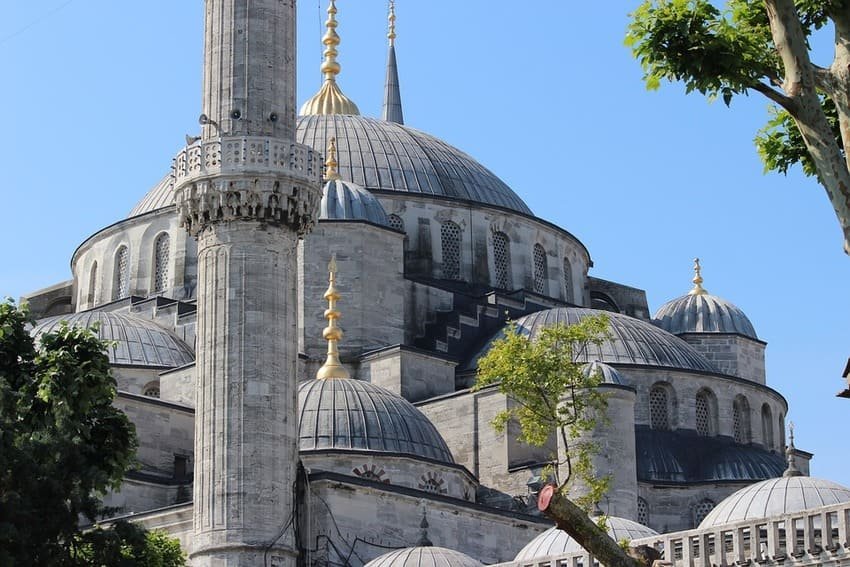
- Dimensions: The main dome rises 43 meters high, the equivalent of a 14-story building!
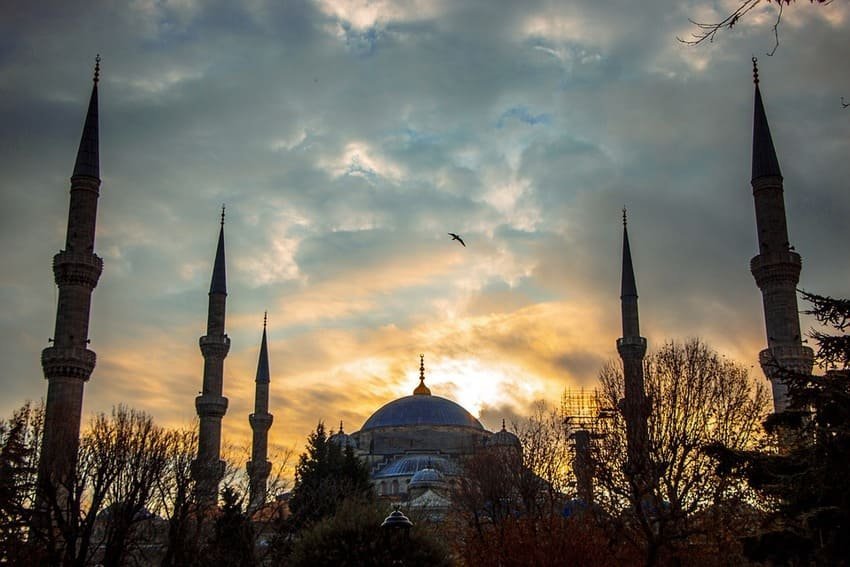
- Unique Feature: It is one of only two mosques in Turkey to possess six minarets, which caused a controversy at the time because only the Kaaba in Mecca had as many. The sultan had to finance the construction of a seventh minaret in Mecca to appease tensions.
Architectural Must-Sees
Once inside, you will be struck by the more than 20,000 Iznik tiles adorning the walls. Their floral motifs (tulips, roses, carnations) are incredibly fine. Their bluish hues gave the mosque its nickname. Look up at the dome and semi-domes: the calligraphy decorating them cites verses from the Quran. Also observe the four massive pillars, nicknamed “elephant legs,” which support the entire structure.
Legends, Anecdotes, and Secrets
A legend says that Sultan Ahmet I asked for gold (altın) minarets, but the architect, faced with the exorbitant cost, supposedly heard “six” (altı), the two words being very close in Turkish. Is it true? No one knows, but the anecdote is delightful and shows the excess of the young sultan’s project, who is incidentally buried in a mausoleum right next door.
What You Must Observe on Site
During your visit, take the time to look up at the 260 windows that flood the prayer hall with changing light throughout the day. Don’t forget to look for tulip motifs on the tiles; it is the symbol of God in Ottoman art. Do not miss the light filtered by the stained glass, which creates an almost divine atmosphere. It is in these details that all the magic of the place resides.
❓ FAQ about the Blue Mosque
What is the entrance fee for the Blue Mosque?
Entrance is totally free for all visitors. Donation boxes are available at the exit for those who wish to contribute to the maintenance of the monument, but it is by no means mandatory.
Why was the Blue Mosque built?
It was built by Sultan Ahmet I at the beginning of the 17th century. His goal was to build an imperial mosque that would rival and even surpass in beauty and grandeur its neighbor, the Hagia Sophia Basilica, thus asserting the power of the Ottoman Empire.
How to dress to visit the Blue Mosque?
Respectful attire is required. Women must cover their heads, shoulders, and knees. Men must wear long pants or long shorts. Scarves and skirts are lent free of charge at the entrance if necessary.
What are the visiting hours for the Blue Mosque?
The mosque is open daily, but it is closed to tourists during the five daily prayers (about 90 minutes each time). It is advisable to check prayer times before your visit, as they change daily.
Is the Blue Mosque wheelchair and stroller accessible?
Yes, there is access for people with reduced mobility. However, the visit can be difficult due to crowds and thick carpets inside. For strollers, it is often simpler to leave them at the entrance.
📚 Official Sources on the Blue Mosque
To prepare your visit and check last-minute information (especially schedules which may change during religious holidays), I advise you to take a look at these reliable sources. This builds confidence and ensures a surprise-free experience.
- The official website of the Turkish Ministry of Culture and Tourism: The most reliable source for general information and exceptional closing days.
- The official mosque website: Ideal for checking daily prayer times and specific announcements for the venue.
- The UNESCO page: To learn more about the historical importance of the district which is listed as a World Heritage site.
- The Wikipedia page: If you want to know more
📢 Transparency Note from Kevin: This article contains affiliate links to partners I personally use (GetYourGuide, Booking…). For you, the price remains unchanged, but by using these links, you directly support my work and allow me to continue offering you these free Istanbul guides. Your visits fund my next simit (Turkish bread) with a good çay (Turkish tea)! Teşekkür ederim (thank you)! And don’t hesitate to follow my adventures on my Instagram page @kevinloveistanbul ❤️
What Else to Do in Istanbul?
Visit Topkapi Palace
Topkapi Palace is the symbol of Istanbul. Opulent and steeped in history, it allows you to get to know the Ottoman sultans more intimately. Visit Topkapi Palace in Istanbul.
What to Do in Istanbul?
Experiences not to be missed and the best things to do in Istanbul, Turkey. Visiting Istanbul with kids, free things to do, best local experiences. What to do in Istanbul?
Leave a Comment