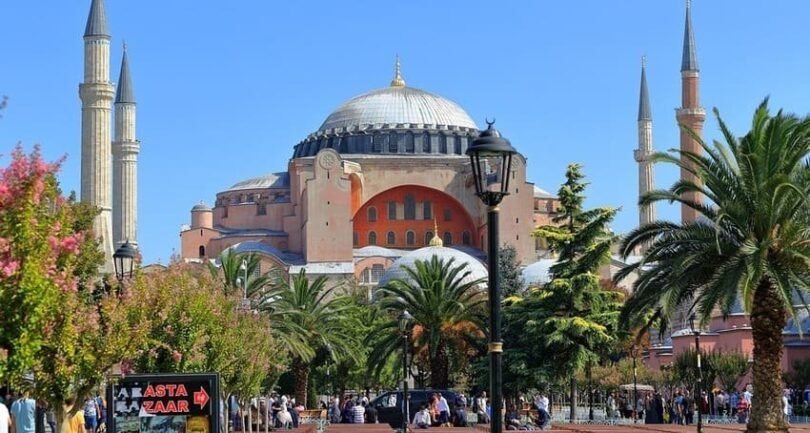

- 🗝️ Key Information about Hagia Sophia
- 🧭 Why visit the Hagia Sophia Basilica?
- 🚇 How to get to Hagia Sophia?
- ⏰ What are the opening hours of Hagia Sophia?
- 🕰️ Best time to visit Hagia Sophia?
- 💰 What are the entrance fees for Hagia Sophia?
- 💻 Advantage of booking
- 🔍 Services and practical tips
- 💡 My tips for a successful visit to Hagia Sophia
- 🏨 Best hotels near Hagia Sophia
- 🗺️ What to see around Hagia Sophia
- 🧿 What to do near Hagia Sophia?
- ⚠️ Tips to avoid scams
- 💬 My personal opinion on Hagia Sophia
- 🏗️ History and architecture of Hagia Sophia
- ❓ FAQ about Hagia Sophia
- 📚 Official sources on Hagia Sophia
- What else to do in Istanbul?
🗝️ Key Information about Hagia Sophia
| Official Name | Hagia Sophia Grand Mosque, Ayasofya-i Kebir Cami-i Şerifi |
| Address | Sultan Ahmet, Ayasofya Meydanı No:1, 34122 Fatih/İstanbul, Turkey |
| Opening Hours | Visitor Gallery: 09:00 – 19:30 (last entry at 19:00). The prayer area is closed to non-worshippers during prayer times. |
| Entrance Fees | £21.75 (approx. 1250 TL) for access to the upper visitor gallery. Access to the prayer area on the ground floor is free (reserved for worshippers). |
| Tickets | Book your skip-the-line ticket here |
| Visit Duration | 1h30 on average |
| Tip #1 | Come at 9 AM sharp to be among the first. You will enjoy a magical quietness and incredible light, far from the midday hustle and bustle. |
| Update | Last price and schedule check: January 2026 |
🧭 Why visit the Hagia Sophia Basilica?
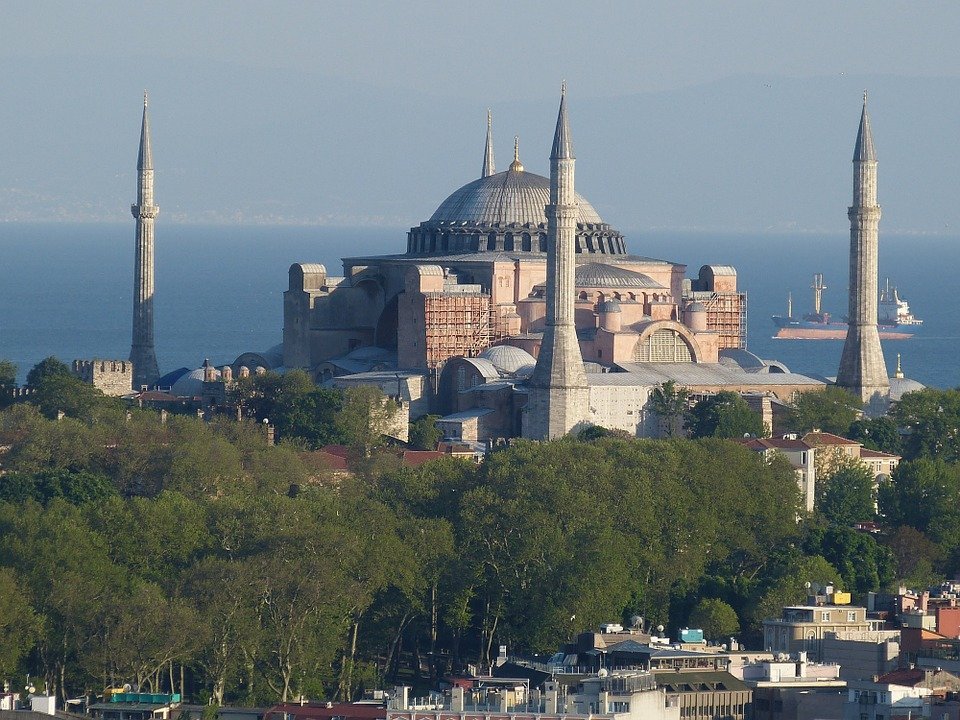
Imagine entering a place that has nearly 1,500 years of history. Hagia Sophia is not just an attraction; it is an icon that has seen empires fall. Why does it attract such crowds? Because it embodies the richness and complexity of Istanbul, a bridge between East and West, Christianity and Islam.
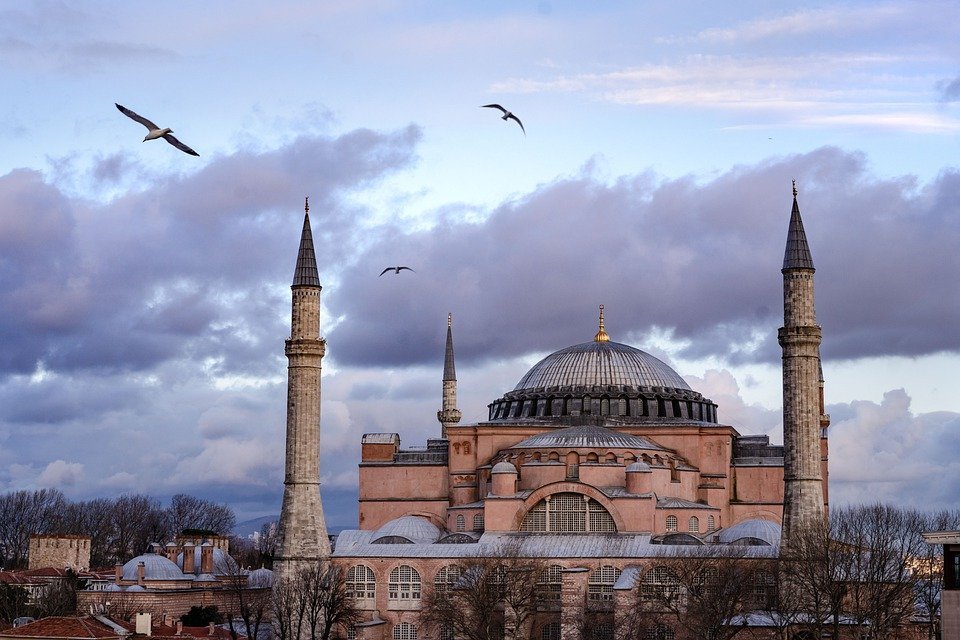
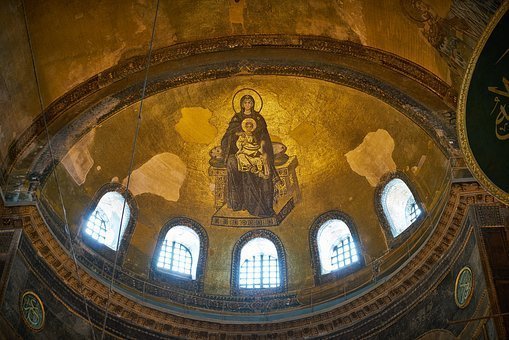
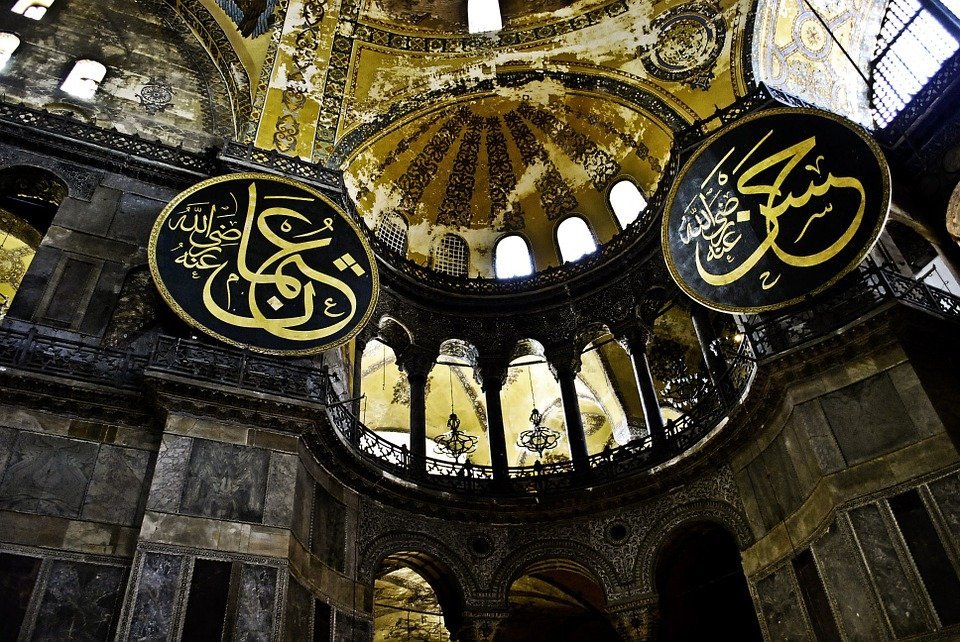
Inside, it is a visual shock. Look up and contemplate this monumental dome 55 meters high, which seems to float in the air. Look for the incredible golden Byzantine mosaics that coexist with the huge medallions of Islamic calligraphy. It is one of the most visited and photographed monuments in the world, and you will quickly understand why.
🚇 How to get to Hagia Sophia?
Hagia Sophia is located in the heart of the historic Sultanahmet area, very easy to access. Here are the best options to get there.
Metro and Tram
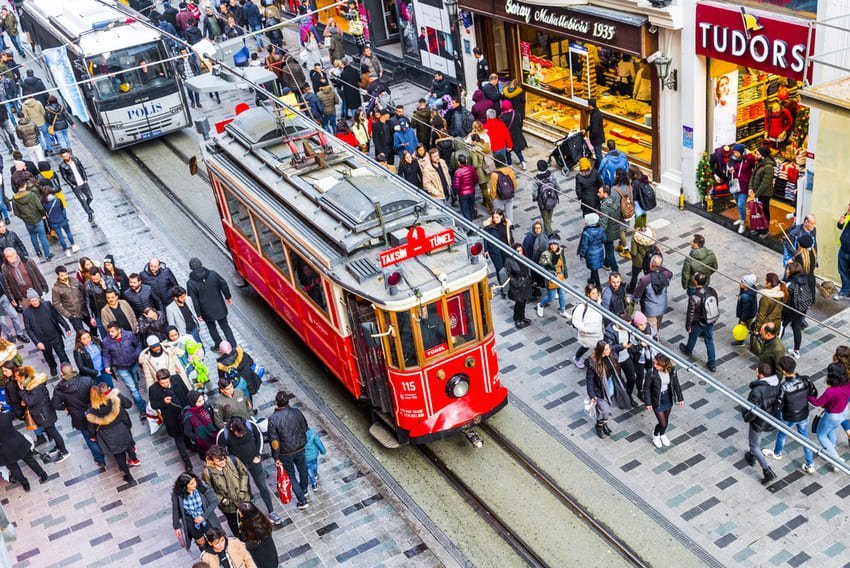
The simplest and most efficient way is to take the T1 tram line (Bağcılar-Kabataş). It is the tourist backbone of Istanbul! Get off at the Sultanahmet stop. From there, Hagia Sophia is right in front of you, a 2-minute walk away.
From Taksim Square, take the F1 funicular to Kabataş first, then the T1 tram. The total journey takes about 25 minutes. For all transport, the Istanbulkart is essential. It is a rechargeable card that makes trips much more economical.
Bus, Ferry and Taxi
Several bus lines serve the area, but the tram remains more direct. If you are coming from the Asian side, taking a ferry to Eminönü then the T1 tram for one stop (or a 10-minute walk) is an excellent option, the view is magnificent!
For taxis, I highly recommend using the BiTaksi or Uber apps to avoid meter scams. A ride from Taksim costs about 300-400 TL. By the way, if you are new to Uber, you can take advantage of a discount on your first rides via my referral link.
📢 Local Expert Tip: Honestly, the T1 tram is your best ally. It is fast, cheap, and drops you off right at the foot of the monument. Avoid taking a taxi during rush hour in this area, traffic jams are terrible and the ride can quickly cost you dearly in time and money.
⏰ What are the opening hours of Hagia Sophia?
Since its reconversion into a mosque, the hours have changed. Here is what you need to know:
- Upper Gallery (for non-Muslim visitors): Open daily from 09:00 to 19:30.
- Last admission: Entry to the gallery is until 19:00.
- Prayer Space (ground floor): Accessible 24/7 for worshippers, but closed to tourists during the five daily prayer times. Be respectful and do not attempt to enter during these times.
🕰️ Best time to visit Hagia Sophia?
The ideal visit duration to fully soak up the place is about 1h30. For the experience to be perfect, timing is crucial.
To avoid the crowd
The secret is to arrive right at opening at 09:00 or late in the day, after 17:30. Tourist buses usually arrive between 10:00 and 16:00, and the queue can become very long, especially in summer. In winter, the crowd is less dense, but the advice remains valid. Strategically, many people visit the Blue Mosque just before, so anticipating their flow is a good idea.
To take photos
📢 Local Expert Tip: For photographers, the morning “golden hour” is magical. The light filtering through the windows of the dome creates a mystical, almost divine atmosphere. Imagine capturing these beams of light in the silence of the first moments… It is also at this time that you can hear the call to prayer from the neighboring Blue Mosque, a moment suspended in time.
💰 What are the entrance fees for Hagia Sophia?
Here are the official rates to plan your budget without surprises.
- Full price (foreign visitors): £21.75 (approx. 1250 TL). This ticket gives access to the upper gallery, from where the view of the nave and mosaics is breathtaking.
- Children: Entry is free for children under 8 years old.
- Museum Pass: The Istanbul Museum Pass is NOT VALID for Hagia Sophia.
- Prayer Area: Access to the ground floor is free, but strictly reserved for prayer. Visitors are admitted outside of prayer times provided they respect the dress code (see below).
💻 Advantage of booking
Honestly, given the queue that can stretch across Sultanahmet Square, booking your ticket online is not a luxury, it is a necessity.
Book your ticket online
I’m telling you this as a friend: don’t waste an hour of your precious stay in Istanbul in a queue. By booking your ticket online, you benefit from skip-the-line access. You enter directly, save your energy for the visit, and are guaranteed your spot. It’s simpler, faster, and saves you from handling cash on site.
Is the Istanbul Pass worth it?
With the Istanbul Tourist Pass®, explore the city with total freedom! This pass opens the doors to over 100 attractions and museums, often including guided tours and skip-the-line tickets. If you plan to visit at least 4 major sites (like Topkapı, the Basilica Cistern…), it becomes very cost-effective. Imagine: no more queues, substantial savings, and even a Bosphorus cruise included. It is the key to a stress-free stay rich in discoveries. You can even cancel for free. Book it now to pay later and enjoy Istanbul to the fullest!
🔍 Services and practical tips
Dress Code and Rules of Conduct
Hagia Sophia is an active place of worship. Respect is paramount. Women must cover their head, shoulders, and knees. Men must wear trousers. If your attire is not suitable, scarves and tunics are lent (or sold) at the entrance. You must also remove your shoes before entering the prayer area (plastic bags are provided). Silence is required, especially during prayers.
Accessibility (PRM, Strollers, Sensitivity)
Accessibility is a delicate point. The ground floor (prayer area) is accessible to people with reduced mobility and strollers. However, access to the upper gallery, which is paid and offers the best views, is via an old and very steep paved ramp. It is difficult to negotiate in a wheelchair, if not inadvisable. There is no elevator. Audio guides are available at the entrance to enrich your visit.
Amenities (Toilets, Lockers, Wi-Fi)
You will find toilets (tuvaletler) outside the main building, in the courtyard. They are generally clean and free. There is no official locker for large bags, travel light. Wi-Fi is not available inside.
Food and Shopping (My advice)
Just at the exit, you will be assailed by stalls selling grilled corn and chestnuts. It’s nice, but for a real break, I advise you to move away a little. Avoid the restaurants on the main square, they are real tourist traps. Walk 5 minutes towards the tram station and find a small café for a real çay (Turkish tea) or a simit (sesame bread ring). My favorite: the Deraliye Terrace, which offers a superb view and quality cuisine without being overpriced.
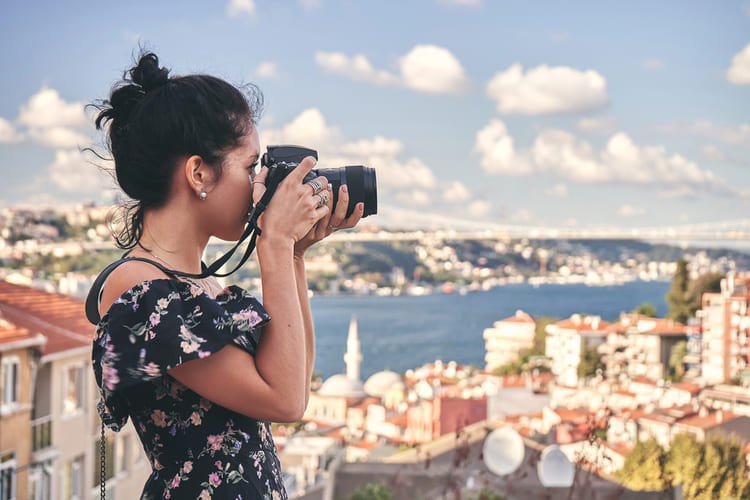
Photo & Video (The best spots)
Photos without flash are allowed. The use of tripods is prohibited. Here are my 2 favorite spots:
- From the upper gallery, in the center: This is THE spot to capture the grandeur of the nave, the dome, and the monumental chandeliers in a single photo.
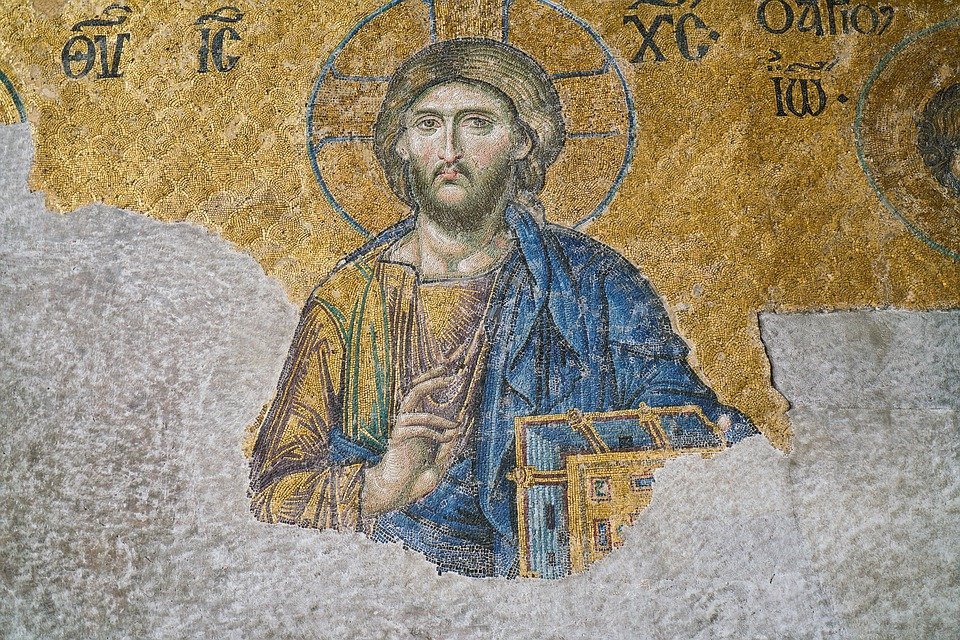
- Upstairs, near the Deesis mosaic: Frame the mosaic with the light coming through the windows. The effect is sublime and charged with emotion.
💡 My tips for a successful visit to Hagia Sophia
Here is my little personal checklist so that everything goes smoothly.
- Wear shoes that are easy to take off and put on, you will save time at the entrance to the prayer area.
- Bring your own scarf if you have one, it’s always more pleasant.
- Bring water, especially in summer. The wait can be in direct sunlight.
- Keep some change on you for the toilets or a small tip, even if it is not mandatory.
My “Off the Beaten Track” Tip
📢 Here is a tip that few people know: after your visit, don’t leave right away. Go around Hagia Sophia to the right and look for the sultans’ mausoleums. Access is free. It is a haven of peace, decorated with sublime Iznik ceramics. You will discover another face of the place, far from the crowd, and it is an excellent spot for quiet photos of the exterior of the monument.

🏨 Best hotels near Hagia Sophia
Staying in the Sultanahmet district means sleeping in the heart of history. Here is my selection of hotels, based on excellent ratings (minimum 4/5) and proximity.
| Budget | Hotel Name | Description |
|---|---|---|
| Budget | The Han Hotel | A simple, clean, and incredibly well-located hotel. You are a 5-minute walk away. Perfect for travelers who prioritize location and budget. Friendly atmosphere. |
| Budget | Bon Hotel Old City | Modern and comfortable rooms at a very fair price. Only 10 minutes walk. Its major asset is its excellent value for money. |
| Mid-range | Hotel Amira Istanbul | Impeccable service and elegant rooms. 7 minutes walk from Hagia Sophia. We love its boutique hotel vibe and terrace with a view. |
| Mid-range | White House Hotel Istanbul | Rated for its exceptional hospitality. 5 minutes walk. Major asset: breakfast on the roof with a panoramic view of the district. |
| High-end | Four Seasons Hotel Istanbul at Sultanahmet | Absolute luxury in a renovated former Ottoman prison. You are 2 minutes walk away. A unique experience and legendary service. |
| High-end | AJWA Sultanahmet | Sumptuous Ottoman decor with all modern comforts. 10 minutes walk. Its spa and artisanal decoration make it a luxurious haven of peace. |

For me, without hesitation, the best hotel in Istanbul close to Hagia Sophia is the White House Hotel Istanbul because it combines perfect proximity, a dream view from the roof, and authentic and warm Turkish hospitality that makes you feel at home.
🗺️ What to see around Hagia Sophia
Take advantage of your visit to discover other must-see sites nearby, everything is walkable!
- The Blue Mosque: just opposite, a 2-minute walk.
- Topkapı Palace: the former residence of the sultans, a 5-minute walk.
- The Basilica Cistern: a mysterious underground atmosphere, a 3-minute walk.
- The Grand Bazaar: for a shopping and cultural immersion, a 15-minute walk.
- Gülhane Park: the former palace garden, perfect for a green break, a 5-minute walk.
Suggested Itinerary (An Imperial Half-Day)
Start at 9 AM with Hagia Sophia (1h30). Then, cross the square to visit the Blue Mosque (45 min). Continue with the Basilica Cistern (45 min) to cool off before lunch. You will have seen three wonders of Istanbul before 2 PM! The Sultanahmet district is a true open-air museum where every alley tells a story.
🧿 What to do near Hagia Sophia?
Extend the magic of your visit to Hagia Sophia! Just next door, hidden treasures, unique activities and services await you, selected for you:
⚠️ Tips to avoid scams
Istanbul is a safe city, but this highly touristy place attracts some opportunists. Here is how to spot them in a blink of an eye:
- Fake guides: Men approach you claiming to be “official” guides to get you past the queue. They often wear fake badges. Kevin’s Counter: Politely decline with a firm “hayır, teşekkürler” (no, thanks) and head to the official ticket office or use your online ticket. Real guides are at the designated entrances.
- The shoe shiner scam: A man “accidentally” drops his brush in front of you. If you pick it up, he will insist on polishing your shoes in thanks, then ask for an exorbitant sum. Kevin’s Counter: Don’t touch it and keep walking. It’s the oldest scam in Istanbul!
Simply stay vigilant and everything will go wonderfully well!
💬 My personal opinion on Hagia Sophia
After dozens of visits, I can tell you: the emotion is always intact. Here is my most sincere analysis.
The Expert’s Pros 👍
- Historical emotion: Entering here is touching 15 centuries of history. You feel the weight of the Byzantine and Ottoman empires. It is overwhelming.
- Revolutionary architecture: This dome is a technical feat that inspired architecture for centuries. You never get tired of it.
- Coexistence of symbols: Seeing mosaics of Christ next to calligraphies of Allah is a powerful symbol unique in the world.
The Cons 👎
- Entrance fee: £21.75 may seem high for some budgets. Solution: If the budget is tight, the exterior and the courtyard are already impressive and free.
- Intense crowd: The place can be crowded, which spoils the contemplation a bit. Solution: Really, follow my advice and come at opening time, it changes EVERYTHING.
- Limited access to the ground floor: You can no longer wander freely in the center like before, which is a bit frustrating. Solution: The view from the upper gallery remains the best to admire the whole.
My Favorite Moment
Frankly, for me, the magical moment is at the end of the day. I go up to the gallery, find a quiet corner near a window. The sun begins to set, the crowd disperses. And there, I listen to the silence settling in, only disturbed by the distant murmur of the city. The golden light hits the old stones and the mosaics seem to catch fire. It is at this precise moment that I feel the very soul of Hagia Sophia. A moment of eternity.
🏗️ History and architecture of Hagia Sophia
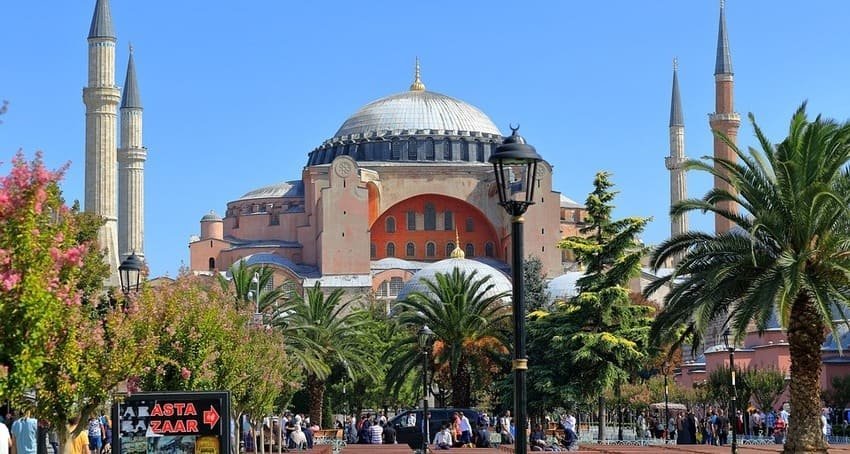
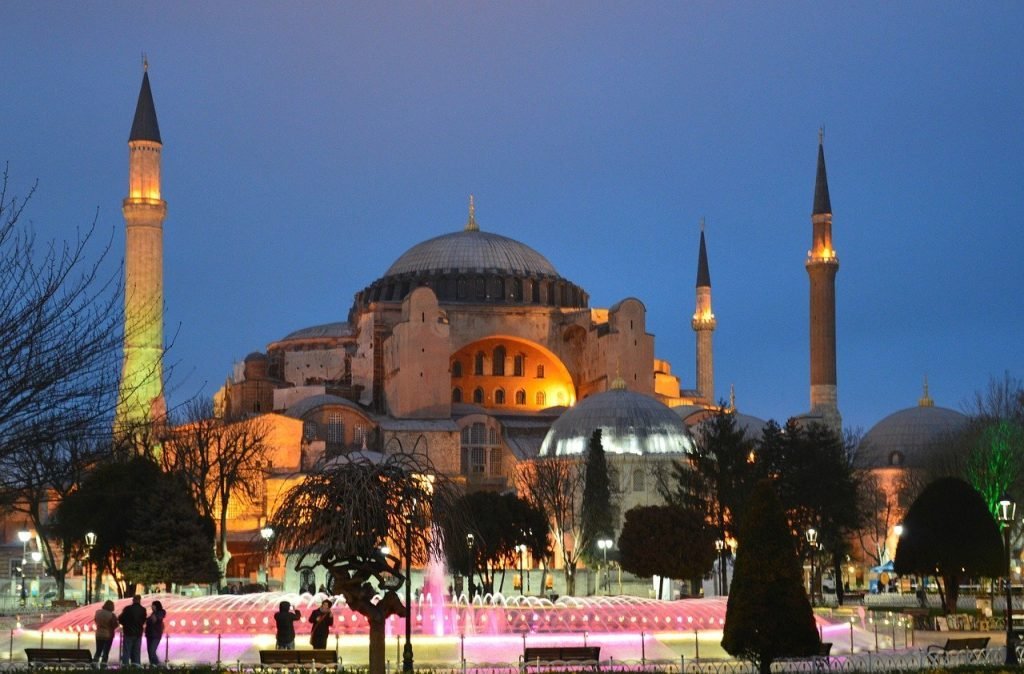
This monument is a bridge between the late Roman era and the height of the Ottoman Empire. Commissioned by Emperor Justinian, the basilica was consecrated in 537. It was the largest cathedral in the Christian world for nearly 1000 years, before being converted into a mosque in 1453, then a museum in 1934, and back to a mosque in 2020.
Identity Card and Key Figures
- Construction year: 532-537 (only 5 years, a record!)
- Architectural style: Wonder of Byzantine architecture, with its massive dome on pendentives.
- Dimensions: The main dome has a diameter of 31 meters (equivalent to a 10-story building!) and rises 55.6 meters from the ground.
- Main materials: Brick, marble from all over the empire. Columns were brought from ancient temples in Ephesus and Egypt.
Architectural Must-Sees
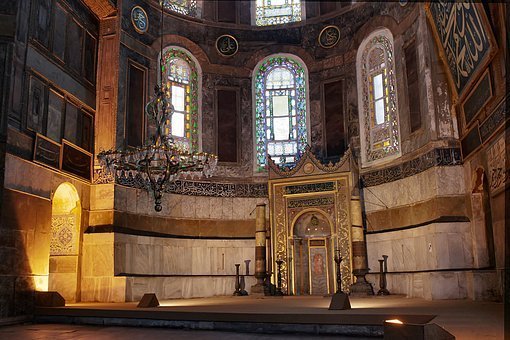
The dome is obviously the star, but don’t miss the pendentives, those concave triangles that allow a round dome to rest on a square plan. It is the major innovation of Hagia Sophia. Also admire the huge bronze chandeliers, added in the Ottoman era, which hang very low and create a warm atmosphere. The calligraphic medallions, works of master Kazasker Mustafa İzzet Efendi in the 19th century, are among the largest in the Islamic world.
Legends, Anecdotes and Secrets
A legend says that when the Ottomans entered the city, a priest holding communion took refuge behind a wall of Hagia Sophia, and the wall closed over him. It is said that he will reappear when the basilica becomes a church again. Also look for the “weeping column”, constantly damp. Touching it is supposed to cure diseases.
What you must observe on site
📢 During your visit, take the time to look up at the mosaics of the Virgin and Child in the apse. Don’t forget to look for this detail on the Deesis mosaic upstairs: the incredibly human and sad face of Christ. Don’t miss that particular light that floods the nave from the 40 windows pierced at the base of the dome. That is the miracle of Hagia Sophia.
❓ FAQ about Hagia Sophia
What is the entrance fee to visit Hagia Sophia?
Entrance to the upper gallery for foreign visitors costs £21.75. Access to the prayer area on the ground floor is free but subject to prayer times and a strict dress code.
Why is Hagia Sophia so famous?
It is famous for its unique history, having been the largest church in the world, then an imperial mosque, a museum, and again a mosque. Its immense dome is an architectural revolution that marked art history for centuries.
How to dress to visit Hagia Sophia?
Respectful attire is required. Women must cover their heads (with a scarf), shoulders, and legs. Men must wear long trousers. Loaner clothes are available at the entrance if necessary.
What are the visiting hours for tourists?
The visitor gallery is open daily from 09:00 to 19:30, with the last entry at 19:00. The prayer space is inaccessible to tourists during Muslim prayer times.
Is Hagia Sophia accessible by wheelchair or with a stroller?
The ground floor (prayer area) is accessible. However, the upper visitor gallery, which is paid, is difficult to access due to a very steep historic paved ramp and the absence of an elevator.
📚 Official sources on Hagia Sophia
To check last-minute information (a schedule change, an exceptional closure…), I advise you to take a look at these reliable sources. This builds confidence and guarantees a visit without unpleasant surprises.
- The official website of the Turkish Ministry of Culture and Tourism (for official prices and opening hours of national museums).
- The official website of the Hagia Sophia Mosque (mainly in Turkish, but useful for announcements).
- The UNESCO page on the Historic Areas of Istanbul (for heritage importance).
📢 Kevin’s Transparency Note: This article contains affiliate links to partners that I personally use (GetYourGuide, Booking…). For you, the price remains unchanged, but by using these links, you directly support my work and allow me to continue offering you these free Istanbul guides. Your visits fund my next simit (Turkish bread) with a good çay (Turkish tea)! Shukran (thank you)! And go follow my Instagram page @kevinloveistanbul ❤️
What else to do in Istanbul?
Visit the Blue Mosque
The Blue Mosque is a must-see in Turkey. Here is a guide to visiting the Blue Mosque in Istanbul with photos and more!
What to do in Istanbul?
The experiences not to be missed and the best things to do in Istanbul, Turkey. Visiting Istanbul with children, free things to do, the best local experiences. What to do in Istanbul?

Leave a Comment