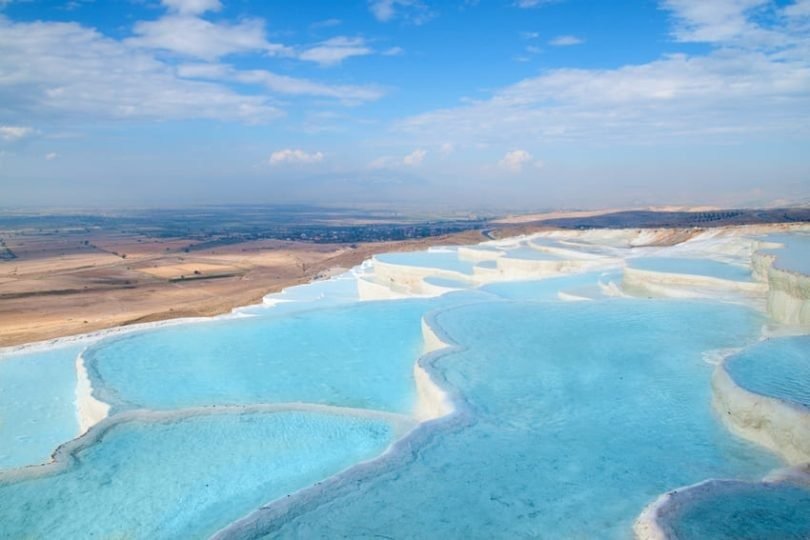

- 🗝️ Key Information about Pamukkale & Hierapolis
- 🧭 Why Visit Pamukkale?
- 🚇 How to Get to Pamukkale?
- ⏰ What are the Opening Hours of Pamukkale?
- 🕰️ Best Time to Visit Pamukkale?
- 💰 What are the Entrance Fees for Pamukkale?
- 🗺️ The Map of Pamukkale
- 💻 Advantage of Booking
- 🔍 Services and Practical Tips
- 💡 My Tips for a Successful Visit to Pamukkale
- 🏨 Best Hotels Near Pamukkale
- 🗺️ What to See Near Pamukkale
- 🧿 What to Do Near Pamukkale
- ⚠️ Tips to Avoid Scams
- 💬 My Personal Opinion on Pamukkale
- 🏗️ History and Architecture of Pamukkale
- ❓ FAQ on Pamukkale
- The Best Hostels in Pamukkale
- Where to Eat Near Pamukkale?
- 📚 Official Sources on Pamukkale
- What Else to Do in Turkey?
🗝️ Key Information about Pamukkale & Hierapolis
| Official Name | Hierapolis-Pamukkale |
| Address | 20280 Pamukkale/Denizli, Turkey |
| Opening Hours | Open daily from 8:00 AM to 9:00 PM |
| Entrance Fees | Hierapolis-Pamukkale: £25 (1500 TL). Free for under 8s. Cleopatra Pool: £11 supplement (approx. 630 TL). |
| Tickets | Skip-the-line tickets available from our partner |
| Visit Duration | Between 4 hours and a full day. |
| Top Tip | Arrive at opening time to walk on the travertines with few people and enjoy the antique pool in the afternoon to escape the heat. |
| Update | Last price and schedule check: January 2026 |
🧭 Why Visit Pamukkale?
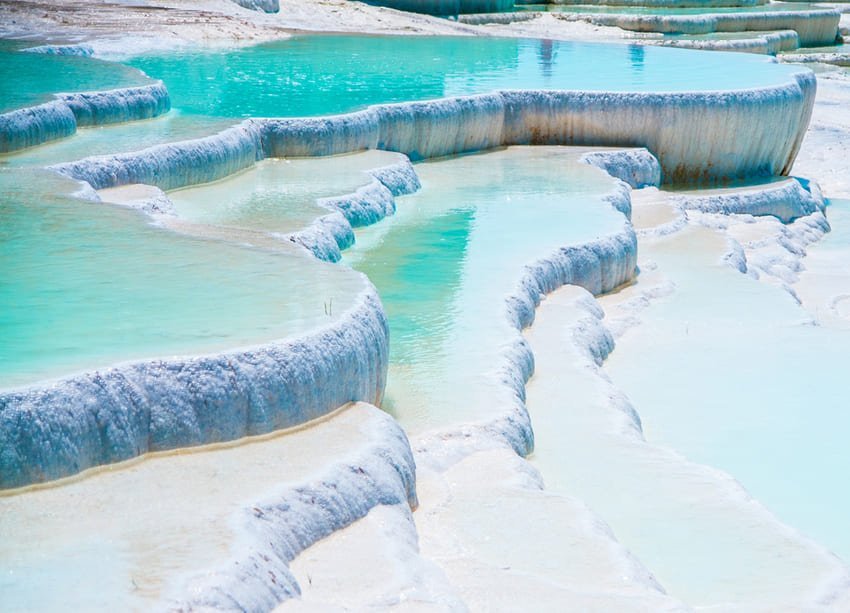
Imagine walking barefoot on immaculate white terraces, shaped by thousands of years of thermal waters. Why does this “Cotton Castle” attract travelers from all over the world? Because Pamukkale isn’t just a landscape, it’s a unique sensory experience, a waking dream where nature has sculpted a spectacular work of art.
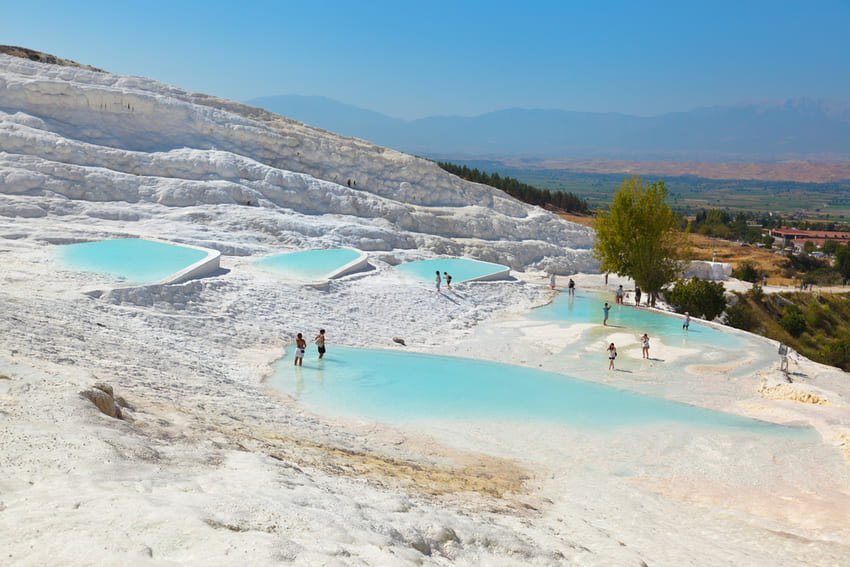
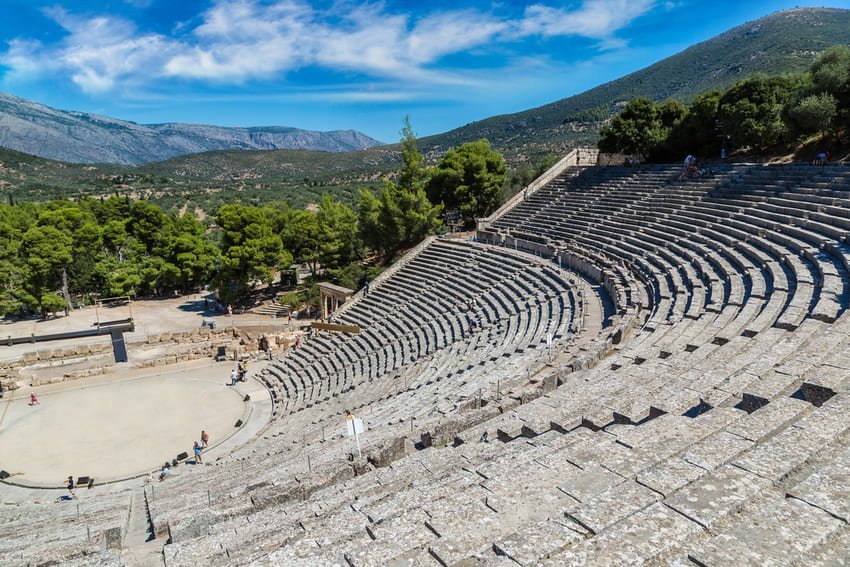
Beyond the famous travertines, the site is home to the ancient city of Hierapolis, an immense archaeological site of over 1000 hectares. You will discover a Roman theater capable of holding 12,000 spectators and a fascinating necropolis. It is undoubtedly one of the most photographed and iconic places in Turkey.
🚇 How to Get to Pamukkale?
Unlike Istanbul’s monuments, Pamukkale requires a bit of organization. But fear not, several options are available to reach this white paradise from major Turkish cities.
Plane, Shuttles, Bus
The fastest option is to take a domestic flight to Denizli-Çardak Airport (DNZ). From Istanbul, the flight takes about 1h15. From there, shuttles (Havaş) or taxis will take you to Pamukkale in 1 hour. However, night buses from Istanbul (about 9-10h journey) are an economical and very popular solution in Turkey.
Car Rental and Taxi
Renting a car offers total freedom. From Izmir or Antalya, count on about a 3-hour drive on well-maintained main roads. For local trips, I recommend BiTaksi or Uber apps to avoid unpleasant surprises with taxis. For a trip from Denizli airport, expect to pay around £25-£34.

By the way, if you don’t have Uber yet, you can use my referral link to get a discount on your first ride.
📢 Local Expert Tip: Honestly, the best option for a short stay is to combine a flight to Denizli with a car rental at the airport. This gives you the speed of the flight and the flexibility on-site to explore nearby sites like Laodicea or Lake Salda. It’s the perfect combo of efficiency and freedom.
⏰ What are the Opening Hours of Pamukkale?
- Open daily from 08:00 to 21:00.
- Last entry is usually 30 to 60 minutes before closing.
- The site is open every day of the year, including public holidays.

🕰️ Best Time to Visit Pamukkale?
To truly soak up the magic of the place, allow at least a half-day (4 to 5 hours). If you are passionate about history and photography, a full day is not too much to explore Hierapolis without rushing.
To Avoid the Crowds
The secret is to be there either early in the morning (between 8 am and 10 am), or in the late afternoon (after 4 pm). You will avoid the tour buses that arrive en masse between 11 am and 3 pm, and above all, you will escape the scorching summer heat. Imagine having the travertines almost to yourself at sunrise… Magical!
For Taking Photos
📢 Kevin’s Tip: For dream photos, aim for the “golden hour”! The sunset over the pools is an unforgettable spectacle, with pink and orange colors reflecting on the water and white calcite. It is at this moment that the atmosphere becomes the softest and most poetic, far from the hustle and bustle of the day.
💰 What are the Entrance Fees for Pamukkale?
Here are the official rates to plan your budget without surprises. They tend to increase regularly, but this gives you a precise idea.
- Full Price (Hierapolis + Travertines): £25 per person (approx 1500 TL).
- Antique Pool (Cleopatra Pool): £11 per person (approx 630 TL), supplement.
- Children: Entry to the main site is free for children under 8.
- Museum Pass: The Museum Pass Turkey (the national version, not the Istanbul pass) is accepted and very cost-effective if you visit multiple sites in Turkey!
🗺️ The Map of Pamukkale
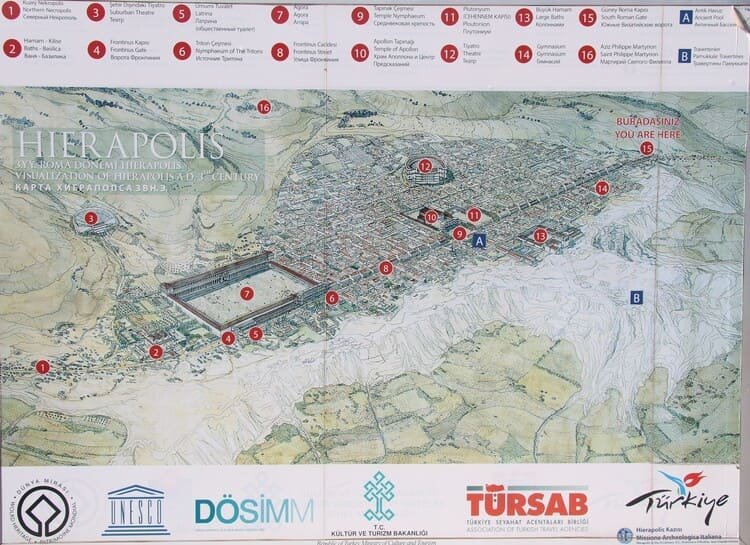
Location of points of interest: (1) North Necropolis, (2) Baths – Basilica, (3) Suburban Theater, (4) Frontinus Gate, (5) Latrine, (6) Nymphaeum of the Tritons, (7) Agora, (8) Frontinus Street, (9) Nymphaeum Temple, (10) Temple of Apollo, (11) Plutonium, (12) Main Theater, (13) Great Baths, (14) Gymnasium, (15) South Roman Gate, (16) Martyrium of Saint Philip, (A) Antique Pool, (B) Pamukkale Travertines.
💻 Advantage of Booking
Honestly, given the popularity of the site, booking your ticket in advance is more than a tip, it’s a necessity for a stress-free visit.
Book Your Ticket Online
I tell you this as a friend: don’t waste an hour of your precious vacation time in the queue under the blazing sun. By booking online, you get skip-the-line access. You scan your ticket on your mobile and enter. It’s simple, fast, and guarantees you start the visit on the right foot!
Opt for a Professional Guide
🔍 Services and Practical Tips
Dress Code and Rules of Use
To visit Hierapolis, comfortable shoes are essential. For the travertines, bring a swimsuit and a towel. Warning, you will have to walk barefoot on the calcite to preserve it, so bring a bag to carry your shoes.
Accessibility (PRM, Strollers, Sensitivity)
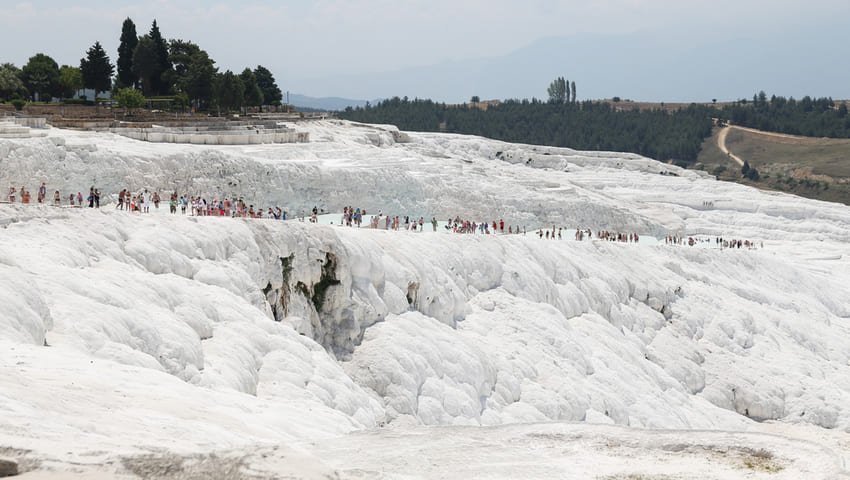
Let’s be honest, accessibility is the site’s weak point. The travertines are impassable by wheelchair or stroller. The ancient city of Hierapolis is vast, with dirt paths and uneven ground. It is therefore a site not recommended for people with very reduced mobility. Shuttles (paid) run through the site, which can help.
Amenities (Toilets, Lockers, Wi-Fi)
You will find toilets (usually free) near the main entrances and the antique pool. Paid lockers are available next to the Cleopatra pool to leave your belongings. Free Wi-Fi is very rare and unreliable on the site.
Food and Shopping (My Advice)
📢 Kevin’s Tip: There are cafes and restaurants on the site, but they are expensive and not very interesting. My advice: avoid them! Have a drink or a meal in the village of Pamukkale instead. For an authentic break, I suggest the Kayaş Wine House. It’s a simple and warm place to taste a good local dish without breaking the bank.

Photo & Video (The Best Spots)
You can take photos and videos everywhere, but flash is prohibited in the museum. Drones are strictly forbidden. My 3 favorite spots: 1. At the top of the travertines at sunset. 2. From the upper tiers of the Roman theater for a bird’s eye view. 3. At the Gate of Domitian, for a grandiose historical setting.
💡 My Tips for a Successful Visit to Pamukkale
Here is my personal checklist to make your day perfect, stress-free, and full of good memories.
- Bring a hat, sunglasses, and sunscreen: the sun beats down hard on the white rock!
- Bring a bottle of water. You can refill it on-site, but having water with you is essential.
- Have a little cash (Turkish Lira) on you for small expenses like lockers, a drink, or internal shuttles.
- Don’t forget a plastic bag or tote bag to put your wet or dirty shoes in after walking on the travertines.

My “Off the Beaten Track” Tip
📢 Here is a tip that few people know: enter through the South Gate and exit through the Town Gate. Why? You start at the top of Hierapolis, explore the site while walking down, and finish in style by descending the travertines. It’s much less tiring than climbing the travertines in the blazing sun, and the view going down is breathtaking!
🏨 Best Hotels Near Pamukkale
To fully enjoy the experience, I recommend spending a night on-site. Here is my selection of hotels, chosen for their excellent reviews (minimum 4/5) and their proximity to the site.
| Budget | Hotel Name | Description |
|---|---|---|
| Budget | Hotel Sinter Tisan | A simple, family-run, and very welcoming hotel. Ideal for solo travelers or couples. Its asset: a superb thermal pool and a friendly atmosphere, 10 minutes’ walk from the site. |
| Budget | Bellamaritimo Hotel | Appreciated for its excellent value for money and lovely staff. The atmosphere is relaxed, perfect for resting after a long day of visiting. Just 5 minutes’ walk from the travertine entrance. |
| Mid-range | Venus Suite Hotel | A charming hotel with spacious rooms and a magnificent pool. Its major asset is its lush garden where you can have breakfast. It is located a few steps from the village center. |
| Mid-range | Melrose Viewpoint Suites | Offers a breathtaking view of the travertines from some rooms and its terrace. The atmosphere is more modern and designed. An excellent choice for a comfortable stay 15 minutes’ walk away. |
| High-end | Doğa Thermal Health & Spa | Luxury and wellness. This hotel offers large indoor and outdoor thermal pools, a complete spa, and high-end services. Ideal for a relaxing stay, 10 minutes by car. |
| High-end | Richmond Pamukkale Thermal | A reference in the region. The main asset is its huge park and high-quality thermal facilities. The atmosphere is that of a grand resort, perfect for recharging 10 minutes by car from the site. |

For me, without hesitation, the best hotel in Pamukkale is the Venus Suite Hotel because it combines charm, incredible comfort, and a perfect location to do everything on foot. You really feel good there!
🗺️ What to See Near Pamukkale
Take advantage of your visit to discover other treasures of the region, often less known but just as fascinating:
- Laodicea (Laodikeia): A huge archaeological site incredibly well-restored just 15 minutes away by car. It is a perfect complement to Hierapolis. (Article coming soon!)
- Aphrodisias: A UNESCO-listed site, famous for its beautifully preserved ancient stadium. Allow 1.5 hours drive.
- Kaklık Cave: A kind of “underground Pamukkale”. A surprising cave with travertines and sulfur water pools. 45 minutes drive.
- Lake Salda: Nicknamed the “Turkish Maldives” for its white sand and turquoise waters. A magical place 1.5 hours away, ideal for a nature day.
Itinerary Suggestion
For an “express” but intense day: dedicate your morning to Pamukkale and Hierapolis, arriving at opening time. Have lunch in the village, then hit the road towards Laodicea for the afternoon. This way, you will get a fascinating overview of two major Roman cities in a single day. The atmosphere of the region, between natural wonders and ancient remains, is truly unique.
🧿 What to Do Near Pamukkale
Extend the magic of your visit to Pamukkale! Just next door, hidden treasures, unique activities, and services await you, selected by our partner:
⚠️ Tips to Avoid Scams
Pamukkale is a safe place, but like any highly touristy spot, it attracts a few opportunists. Here is how to spot them in the blink of an eye:
- Unofficial “guides” at the entrance: People approach you claiming to be guides and offer a cheaper “private” tour. Kevin’s Move: Politely refuse (“No, thank you” or “Hayır, teşekkürler”) and show no interest. Real guides have official badges and never solicit in this way.
- Restaurants with menus without prices: Some establishments just outside the exit may “forget” to display prices and present you with a very salty bill. Kevin’s Move: Always ask to see a menu with prices before sitting down. If it’s not clear, leave.
- Taxis that “negotiate” the price: At the exit, a taxi might offer you an exorbitant fixed price to return to your hotel or Denizli, refusing to use the meter. Kevin’s Move: Insist on the meter (taksimetre) or, better yet, order your taxi via an app like BiTaksi for a fair price and no argument.
Just stay vigilant and everything will go wonderfully well! The locals in the region are mostly very welcoming.
💬 My Personal Opinion on Pamukkale
After several visits in different seasons, here is my honest analysis of this extraordinary place.
The Expert’s “Pros” 👍
- A unique landscape in the world: The feeling of walking on these geological formations is indescribable. It is a natural spectacle that marks you for life.
- The historical richness of Hierapolis: The site is much more than pretty pools. The theater and the necropolis are of incredible historical richness.
- The sunset experience: The atmosphere at the end of the day, when the crowd disperses and the sky lights up, is purely magical.
The “Cons” 👎
- The crowds during the day: Between 11 am and 4 pm, the experience can be spoiled by the crowd. My solution: go during off-peak hours, as I advised.
- The lack of water in some pools: To preserve the site, water is channeled and some pools may be dry, which can be disappointing. My solution: focus on the beauty of the whole and don’t expect all the postcard pools to be full.
- The high price: Entry has become quite expensive, especially if you add the Cleopatra pool. My solution: consider the Museum Pass Turkey if you are on a road trip, or see this ticket as entry for a double site (natural and archaeological) absolutely unique.
My Favorite Moment
Frankly, my strongest memory remains that moment, at the end of the day, sitting at the top of the travertines. Most tourists had left. There was only the sound of water gently flowing and the colors of the sky changing every minute. For me, that is the essence of Pamukkale: a deep sense of peace and connection with the raw beauty of nature.
🏗️ History and Architecture of Pamukkale
This site is an incredible bridge between the power of nature and the human genius of the Roman Empire. Ancient Hierapolis was founded in the 2nd century BC by the Attalid dynasty, kings of Pergamon, before becoming a prosperous Roman spa city.
Identity Card and Key Figures
- Year of construction: Founded in the 2nd century BC, peak under the Roman Empire.
- Architectural style: Mainly Hellenistic and Imperial Roman.
- Dimensions: The necropolis of Hierapolis is one of the largest in Anatolia, with over 1200 tombs. The theater could hold 12,000 people, the size of a modern concert hall!
- Main materials: Marble and limestone for buildings, and of course, travertine (a form of calcite) for natural formations.
Architectural Must-Sees
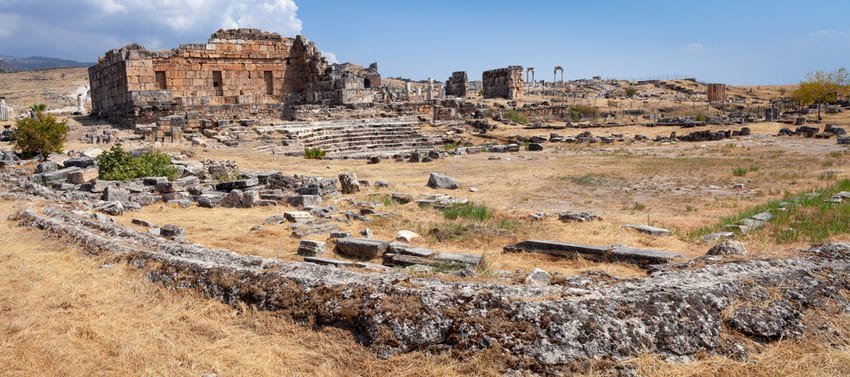
The Roman theater is the jewel of the site, with its remarkably preserved stage facade (scaenae frons). Don’t miss the Plutonium, a cave dedicated to the god of the underworld, and the Martyrium of Saint Philip, an octagonal building erected where the apostle was supposedly martyred.
Legends, Anecdotes, and Secrets
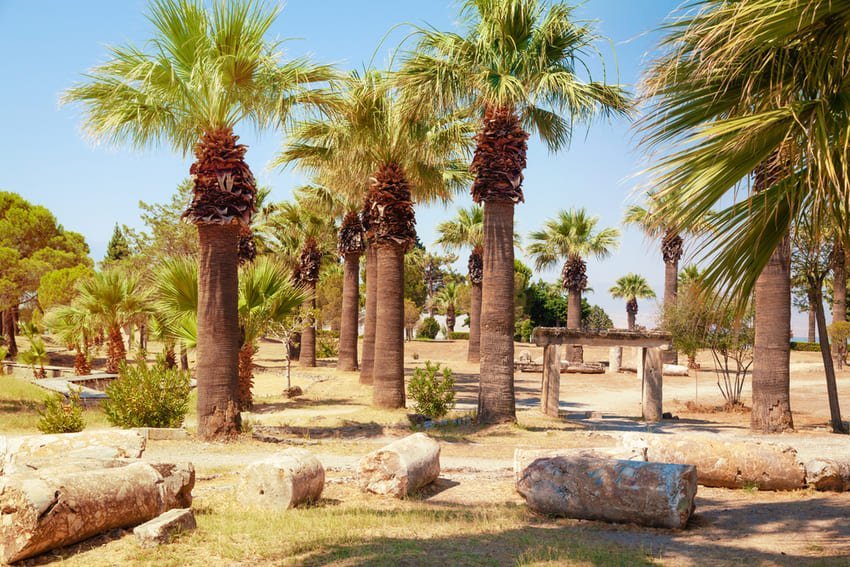
Legend has it that the pools were the secret bathing place of Cleopatra herself, hence the name “Antique Pool”. While likely not true, the idea of swimming amidst ancient Roman columns fallen into the water after an earthquake remains absolutely fascinating and unique in the world.

What You Should Observe on Site
📢 During your visit, take the time to look up at the details of the sarcophagi in the necropolis, they tell the lives of the deceased. Don’t forget to look for Latin inscriptions on arches and buildings. And above all, don’t miss the incredible view over the entire valley from the top of the theater.
❓ FAQ on Pamukkale
What is the entrance fee for Pamukkale?
The combined ticket for the ancient site of Hierapolis and the travertines costs £26 per person. Access to the Cleopatra Pool is extra, at £11.50.
Why is the Pamukkale site called the “cotton castle”?
This nickname comes from the Turkish “pamuk” (cotton) and “kale” (castle). It perfectly describes the appearance of the site: dazzling white terraces that look like a fortress made of cotton.
How to dress to visit Pamukkale?
Plan a double outfit: light clothes and comfortable shoes to explore the archaeological site of Hierapolis, and a swimsuit with a towel if you wish to bathe in the travertines or the antique pool.
What are the opening hours of Pamukkale?
Regarding opening hours, the tourist area of Pamukkale/Hierapolis is open daily from 8:00 AM to 9:00 PM.
Is Pamukkale accessible to wheelchairs and strollers?
Unfortunately, no. The terrain is very uneven. Walking barefoot on the travertines and the dirt paths of the ancient site makes visiting very complicated, if not impossible, in a wheelchair or with a stroller.
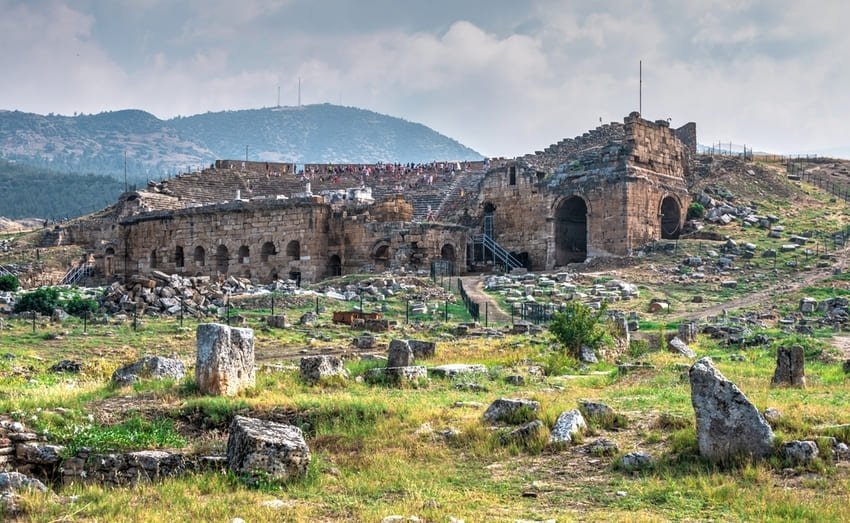
The Best Hostels in Pamukkale
Most prefer to stay in Denizli and take a bus, but I recommend staying near the hot springs in Pamukkale to visit the site before the tourists arrive.
Here are three hotels located in the town of Pamukkale, within walking distance of the travertine pools:
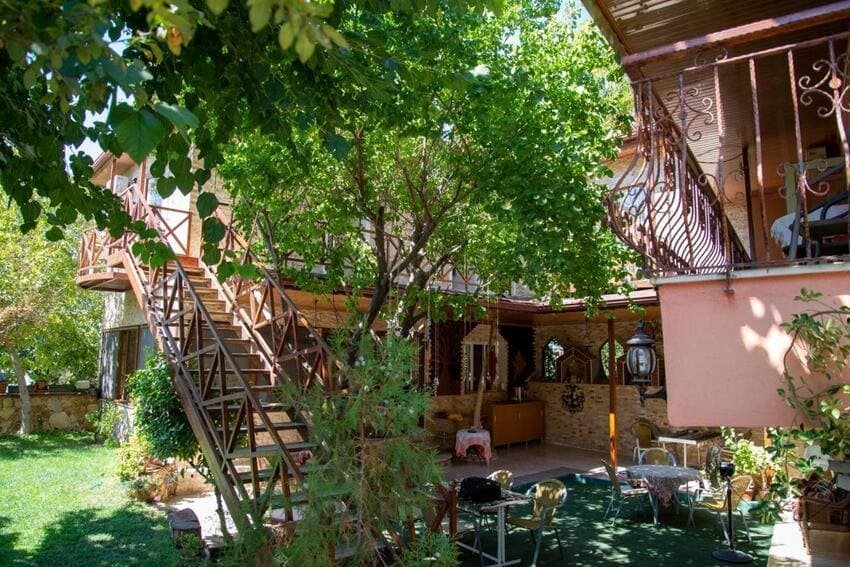
Hotel Sinter Terasse House: Our favorite in Pamukkale! The rooms are comfortable and quiet, but what makes this hotel unique is the sincere attention of the staff, especially the host Sami, who gave us plenty of good tips for discovering the region.
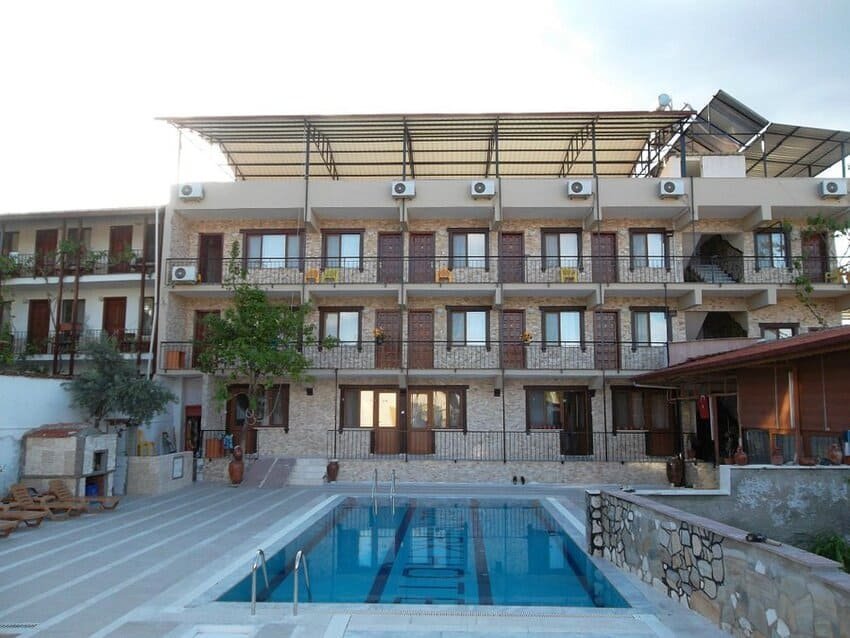
Ozturk Hotel: The Ozturk Hotel, located very close to the Pamukkale travertine pools, offers spacious and affordable rooms with hammam-style bathrooms. The large pool is ideal for relaxing after a day in Hierapolis. Breakfast is a real treat, one of my favorites on site.

Ozbay Hotel: The Ozbay Hotel, close to Pamukkale and Hierapolis, offers large, clean, and bright rooms. From some, you can even admire the water-filled travertine pools. A perfect place to combine comfort and an exceptional view of this unique site.
The hotel offers excellent breakfast options and very good restaurants are located nearby.
Where to Eat Near Pamukkale?
Pamukkale has some very good restaurants where you can taste some of the best Turkish dishes. Here are a few of our favorites:
Kayas Restaurant & Bar: This exquisite restaurant in Pamukkale offers a great selection of beers and fantastic dishes! The eggplant served with meat is incredibly delicious and the fried chicken comes out sizzling with a live fire underneath.
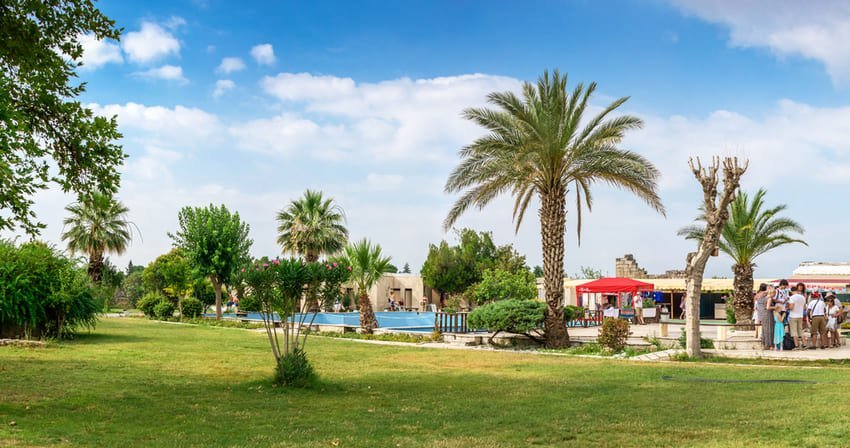
Teras Restaurant: This restaurant offers excellent Gozleme and beef skewers. The meat served in the dishes is truly tender. From Teras restaurant, you will have a beautiful view of the white hot springs. What I really liked about this restaurant is the kindness of the staff and the incredible service.
White House Restaurant & Cafe: From the moment you arrive, this restaurant welcomes you like family. Its white and blue decor is inspired by the hot springs. You will taste tasty Turkish and Mediterranean dishes: pides, Greek salads, hummus, vegetarian pasta, and spicy curries. Everything is fresh and beautifully presented. The staff is friendly, with some waitresses speaking good English. The large windows offer a pleasant view of the street.

To get there, you will have to follow Pamukkale Boulevard (E87 highway) north for 16 km to the small town.
📚 Official Sources on Pamukkale
To prepare your visit and check last-minute information (you never know!), I encourage you to consult these reliable sources. It builds trust and guarantees you have the most up-to-date data.
- The official website of the Turkish Ministry of Culture and Tourism (in Turkish, but useful with a translator for official rates).
- The archaeological mission website (in English, for history buffs).
- The UNESCO page on Hierapolis-Pamukkale (in English, to understand the universal importance of the site).
- The Wikipedia page of Pamukkale (in English, for a complete overview).
📢 Kevin’s Transparency Note: This article contains affiliate links to partners I personally use (GetYourGuide, Booking…). For you, the price remains unchanged, but by using these links, you directly support my work and allow me to continue offering you these free guides. Your visits fund my next simit with a good çay! Shukran! And go follow my Instagram page @kevinloveistanbul ❤️
What Else to Do in Turkey?
Do you know the city of Ephesus? It’s magnificent.
Visit Hagia Sophia
Hagia Sophia is a must-see in Turkey. Here is a guide to visit Hagia Sophia Mosque in Istanbul. Photos, schedules, and much more.
What to Do in Istanbul?
Experiences not to be missed and the best things to do in Istanbul, Turkey. Visiting Istanbul with children, free things to do, best local experiences. What to do in Istanbul?

Leave a Comment